
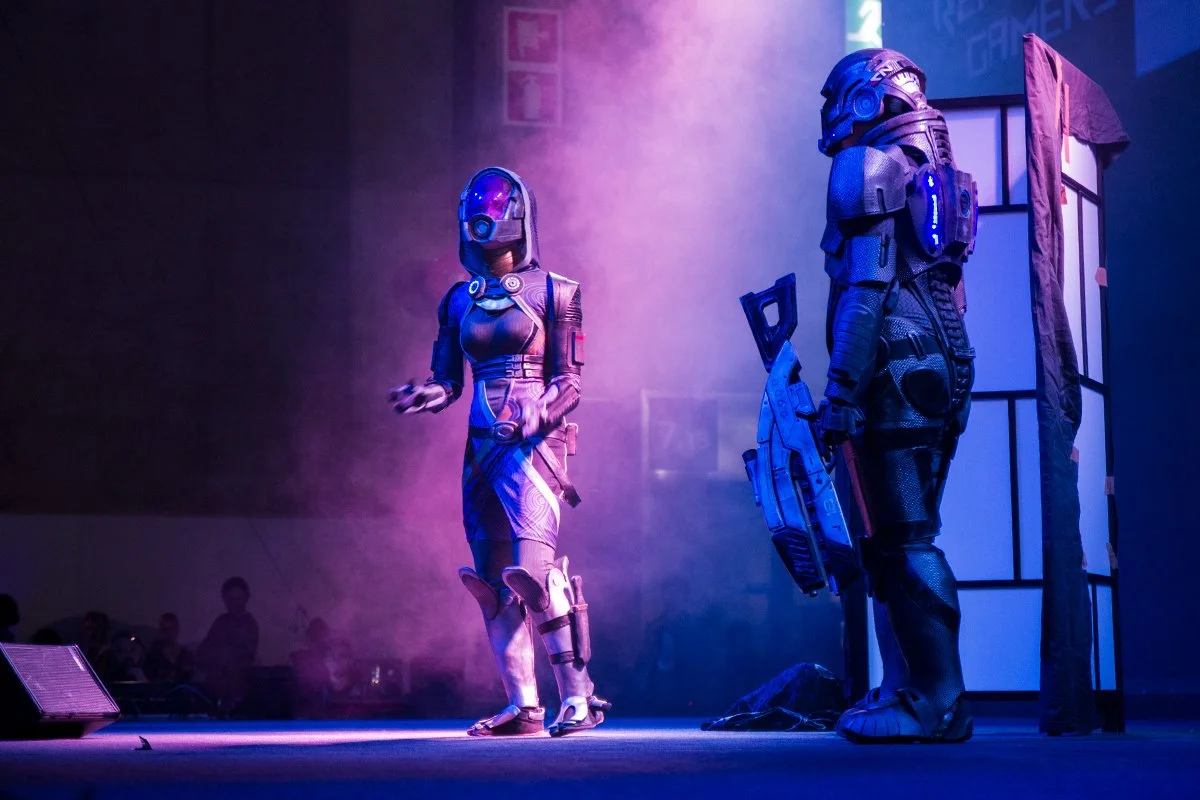




In the Group Variety category contestants compete as pairs with costumes and performances. The judging panel consists of experienced cosplayers, who will select one (1) winning pair and one (1) runner-up pair for the category. The winners will join the Finnish Championship team and represent Finland in the ICL Finals in Spain in 2027.
Will you be the next Group Variety Champion? Please carefully read the rules and evaluation criteria before applying!
The application period begins on January 27, 2026 at 18.00 and ends on February 10, 2026 at 18.00. Applications are submitted via a Google Forms application. For the category, a maximum of of seven (7) pairs will be selected, as well as two (2) reserve spots. Contestants will be selected based on their applications, and all applicants will be contacted by email about the outcome of the selection process. If all contestant spots are not filled by the end of the application period, an additional application round will be held.




FCC judges
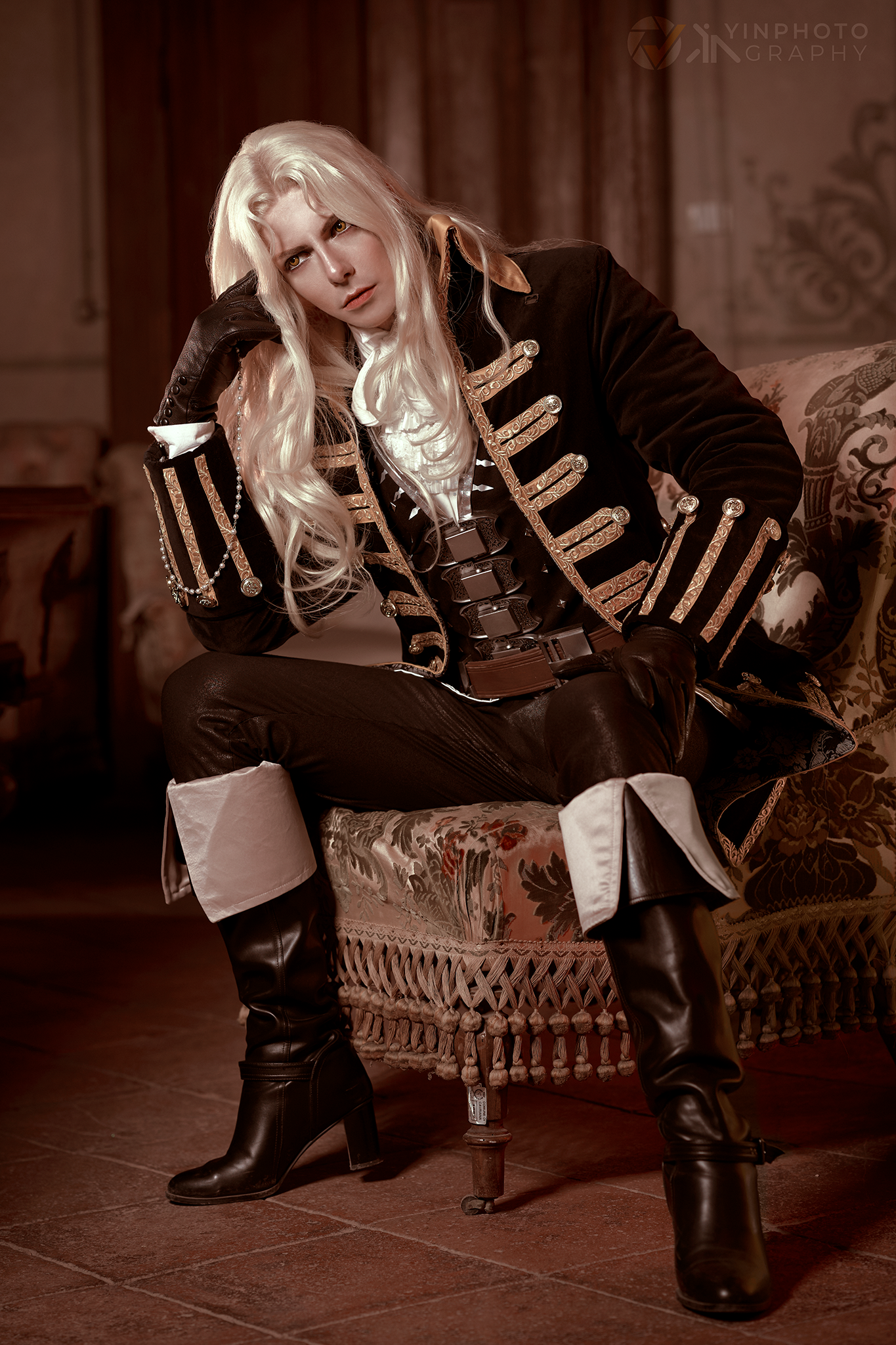
GROUP VARIETY RULES
These rules apply to the Group Variety category and ICL-Duo Finnish qualifiers held as part of Arctic Lights Comic Con 2026. Contestants perform in pairs and they are evaluated based on the costumes and performance. The winners will represent Finland at the ICL finals, held at Japan Weekend in Spain in 2027. Please remember to read the original English rules regarding the finals and representation in the event's official rulebook. Changes to the rules for the qualifiers or the finals may occur.
The applicant must be at least 18 years old by 16 May 2026, and must either be a Finnish citizen or hold a permanent residence permit in Finland. If the applicant has previously represented another country in international cosplay competitions, they should review the original English rules regarding eligibility. Previous organizers of ICL selections are not allowed to compete.
The competition is organized by Cosvision ry in collaboration with Arctic Lights Comic Con.


-
1.1. Before the competition, the contestant must submit comprehensive reference photos of their character and any possible accessories/props to the competition organizers. The judges will use these references to evaluate the costume created by the contestant. The referene images must show the entire character and all parts of the costume. Collages are allowed, if it can be verified that all images are the same costume.
1.2. Prior to the competition, the contestant will submit a completed information form and build book to the organizers, in which they can describe the creation process of their costume. The form will be provided to the judges, who will review them independently to familiarize themselves with the contestant’s costume and its construction process before the pre-judging on the event day. Instructions for preparing the build book will be provided to contestants later.
1.3. The contestant will meet the judges only once in the pre-judging session, where each contestant’s costume is evaluated individually. The costume will be judged based on the provided reference materials and the judges will not take the contestant’s personal appearance into account. The contestant must attend the pre-judging in full costume, including all accessories and props. Each pair will have 12 minutes for the evaluation of their costume.
1.4. During the pre-judging session, the judges may ask the contestant questions about the construction and final result of the costume. The judges may touch the costume with the contestant’s permission. The contestant is not allowed to bring a portfolio, scrapbook, fabric samples or any additional materials to showcase the making of the costume or performance to the pre-judging session. The contestant must be able to describe their costume or performance in both Finnish and English.
1.5. The judges will not take the contestant’s previous experience as a costume maker, performer or competitor into account. Only the final result matters.
1.6. The judges will not take photos of the contestant, their costume or props in the pre-judging session.
1.7. The judges will deliberate together to select one (1) winning pair and one (1) runner-up pair for the category. The judges’ decisions will be based on the contestants’ costume and performance scoring.
1.8. The contestants’ performance will be evaluated during the competition, after the judges have seen all of the performances.
1.9. Props are not evaluated during pre-judging. Props are part of the performance score and must be at least 50% made by the contestants themselves.
-
Costume: 40% of the total evaluation
Construction, proportions, fit and mobility
Difficulty, variability in used techniques and craftsmanship quality
Choice of materials and colors
Attention to detail and finishing
Likeness of the character
Performance: 60% of the total evaluation
Content of the performance: clarity of the performance, how well the narrative is handled, how well the performance suits the nature of the source material and originality of the performance
Parody is allowed and will be judged based on how skillfully it parodies the source material and its nature
Stage performance: how the sounds, music, stage props, and the use of the stage create atmosphere and advance the story
Stage expression: how the contestant presents themselves with body language and facial expressions
In addition, the following factors will positively influence the contestant’s evaluation:
Eligibility
The contestant's positive attitude, following the schedules and instructions and willingness to communicate in English
-
3.1. COSTUME
3.1.1. Purchased or modified costumes and props are not permitted. The contestant must create their entire costume themselves, including all handheld props and must be able to provide an explanation of the costume’s construction process to the judges. When using automated production tools, such as a 3D printer or embroidery machine, the contestant must also create the digital files for these machines themselves. Patterns, files, or pre-made/customized garments designed or purchased by others may only be used if they do not exceed 20% of the overall costumes.
3.1.2 Smoke machines in the costume are not allowed for safety reasons. A small system integrated into the costume can be accepted with a special permission from the competition organizers in advance and the machine must be tested on site.
3.1.3. The contestant’s costume must be completed upon arrival at the event for the competition venue. However, any damage caused during travel may be repaired after arrival.
3.1.4. A contestant may participate with a costume they have used in previous competitions, provided that the costume has not been used to win a qualifier for an international competition held in Finland, nor has it been used in the finals of an international competition.
Examples: Extreme Cosplay Gathering, Nordic Cosplay Championships, Finnish Cosplay Championships, World Cosplay Summit, Cosplay World Masters, EuroCosplay Championships, International Cosplay League, Europa Cosplay Cup, or any other preliminary competition leading to an international cosplay contest.
3.1.5. If the contestant is selected to represent Finland at the ICL finals, the costume used in the qualifying round may also be used in the finals, as long as:
The contestant has not won any international cosplay competition qualifiers with the costume, excluding the qualifier contestant was selected to represent Finland in the upcoming ICL finals.
The costume may have been used previously in international cosplay competition qualifiers.
The costume has not been used previously in any international cosplay competition finals.
The costume cannot be used in any other competition before the finals after contestant has been selected.
3.1.6. The contestant pair may assist each other in creating their costumes. Each contestant must make at least 50% of their own costume, meaning that one contestant cannot make all parts of both costumes.
Example 1: One contestant makes half of their own costume, while the other contestant makes their own costume entirely and also half of the other costume.
Example 2: One contestant makes the armor pieces for both costumes and the other contestant makes the sewing parts for both. Both contestants must work together and actively participate in the creation of the costumes.
3.2. CHARACTER CHOICE
3.2.1. The chosen character must be a fictional character from a licensed source and the contestant must provide published images as references for the judges. Approved sources are:
Manga and comics
Anime and cartoons
Books
Movies and TV series
Musicals
Video games
3.2.2. Unofficial characters are not allowed in the competition. This includes characters or costumes created by the contestant themselves. Independent web series, personal projects, beta versions of games or unpublished works are not accepted as official sources. Only commercially produced works that have been officially released through an external publisher or distributor are considered valid. Customizable characters are not allowed unless an official, default design exists and is strictly followed.
3.2.3. Unofficial characters are not allowed in the competition. This includes characters or costumes created by the contestant themselves. Independent web series, personal projects, beta versions of games or unpublished works are not accepted as official sources. Only commercially produced works that have been officially released through an external publisher or distributor are considered valid. Customizable characters are not allowed unless an official, default design exists and is strictly followed.
3.2.4. The character may not be a genderbend or gijinka version unless this version is part of the original published source.
3.2.5. The only unofficial sources allowed in the competition are Sakizô and Hannah Alexander illustrations.
3.2.6. Offensive costumes or makeup are strictly prohibited. For additional questions regarding this rule, the contestant may contact the competition organizers.
3.2.7. Both contestants must choose costumes from the same source material. For example, if the costumes are from the film series How to Train Your Dragon, one contestant’s costume cannot be from the first film while the other’s is from the second film; both costumes must originate from the same film. The same rule applies to any costume swaps, unless a swap is justified by the story’s development. In such cases, permission must be obtained separately from the ICL qualifier organizers before applying for the qualifying round.
3.2.8. If the costumes are based on merchandise, both costumes must come from the same collection or the same original source. If merchandise does not include both costumes, the contestants must select either the original source or another merchandise source. One contestant may not choose the original source while the other chooses merchandise.
3.3. PROPS AND THEIR SAFETY
3.3.1. The use of real weapons in the competition is strictly prohibited. Weapon replicas that resemble realistic weapons must be marked with red tape, and the barrels of such weapons must be blocked. The competition organizers will assist with marking of the props on the competition day if necessary.
3.3.2. Realistic prop weapons or weapon replicas are only allowed on stage during the performance and during official photoshoots. At all other times, such props must be stored out of sight or kept safely in the cosplay backstage area.
3.3.3. When transporting the aforementioned props between the photoshoot area, the cosplay backstage and the performance stage, they must be kept out of sight, and the contestant must ensure they can be transported safely.
3.3.4. Contestants are strongly encouraged to familiarize themselves with the Arctic Lights Comic Con safety rules, available in the convention’s FAQ section.
-
4.1 PERFORMANCE DESIGN AND EXECUTION
4.1.1. The contestant pair must prepare a performance with a minimum duration of 90 seconds (1:30 minutes) and maximum duration of 180 seconds (3:00 minutes).
4.1.2. A background video must be used in the performance. The video may include images or video clips. Excessive flashing lights or strobe effects in the video are prohibited. The stage dimensions and the size of the background video screen will be provided to the contestants in advance.
4.1.3. If the performance includes dialogue, the contestants must produce a high-quality audio track. Poor or unclear audio quality may negatively affect the performance score. The dialogue must be in either English or Finnish. Exceptions to the performance language may be made if the original background track is a song originally performed in another language. If subtitles are used, they must be included directly in the background video, as no separate screen or display for subtitles is available. The use of external voice actors is allowed, but the script must be entirely written by the contestants. It is not possible to use a microphone in the performance: all dialogue and singing must be included in the sound track. The music used in the performance is preferred to be royalty-free.
4.1.4. The performance must be family-friendly in content and language.
4.1.5. No assistants are allowed in the performance.
4.1.6. The video and audio of the performance must be included in a single MP4 file. The contestants must submit the file in advance by the deadline specified by the organizers. Additionally, It is recommended that the contestants save a backup copy of the file on an external USB drive and bring it to the competition.
4.1.7. The contestants must submit lighting requests in advance by the given deadline. The contestants are responsible for planning their own stage lighting. In addition, the contestants may use the background video to create colored lighting effects on stage.
4.1.8. Stage props used in the performance will not be pre-judged. Props are part of the performance score and at least 50% of them must be made by the contestant pair themselves. If any help with any part of the stage props has been provided, it has to be said for it to be scored correspondingly. In case it’s hidden and later revealed, the contestants will be immediately disqualified, and this offense will be considered for the future contests.
4.1.9. The contestants must inform the organizers in advance of any stage props included in the performance. Cosvision ry may provide certain stage elements such as a table or chair on a case-by-case basis, but availability must be confirmed with the organizers beforehand.
4.1.10. The contestants may not compete in the qualifiers with a performance they have previously used in another competition. The performance must be entirely new, or at least 50%different from any earlier version.
4.2. USE OF GENERATIVE ARTIFICIAL INTELLIGENCE (AI) IN PERFORMANCE DESIGN
4.2.1. The use of generative AI in the creation of competition materials is strictly prohibited. Cosvision does not specify particular programs, applications, or plug-ins the contestants are not allowed to use for producing competition-related materials. The contestants are responsible for the programs and tools they choose to use.
Note: Intelligent tools that analyze and process the material’s own data are permitted. For example, it is allowed to use Photoshop’s Content-Aware Fill, which analyzes image pixels and fills selected areas with similar ones.
4.2.2. Image and video materials must not be generated or modified using generative AI. The contestants may not include AI-generated elements such as backgrounds, buildings, characters, or animals in their images or videos. If the contestant pair does not create the visual or video material or its elements personally, they are responsible for ensuring proper usage rights. Third-party materials must not contain any AI-generated content.
4.2.3. The use of generative AI to produce text-to-speech audio tracks is prohibited. All music in the audio track must be human-made and not created by generative AI. Dialogue must be spoken by a human or taken directly from an existing source, such as a video game or movie. Spoken voices may be edited with pitch adjustment or voice-modifying filters and effects in editing software.
4.2.4. When submitting technical details, the contestant must include a short description of the technical production process of the performance. The competition organizers have the right to request additional clarification if they suspect that the contestant pair has used generative AI in their materials.
Example: “The background track was created using Adobe Premiere. The video footage is mostly taken directly from the game, except for a few of my own drawings. I voice my own character, but my partner’s lines are taken directly from the game.”
4.2.5. If a contestant pair is found to have used prohibited AI-generated elements, points may be deducted in the relevant category, or the contestants may even be disqualified.
4.3. USE OF THE STAGE
4.3.1. The performance must take place on stage and should not extend beyond the edges of the stage, such as into the audience or the area between the stage and the audience. Contestants may exit to scenery during their performance for up to 15 seconds at a time, provided that the stage is never left without both performers for longer than this.
4.3.2. For idol-themed performances (Love Live, Vocaloid, AKB0048, etc.), simple dancing or lipsyncing may not exceed 30 seconds in total.
4.3.3. Fire effects, sparks, smoke, as well as any pyrotechnics and laser lights are prohibited. During the performance, no materials requiring cleanup may be spread on the stage, such as glass, sand, liquids or powdery substances (fake blood, flour, artificial snow, etc.), glitter, or flower petals. If the contestant pair violates this rule, they will not be able to place in the competition.
4.3.4. Stage setup must not exceed 30 seconds. The performance begins immediately after the contestant pair is introduced. Stage props included in the performance will be brought to the stage on behalf of the contestants.
4.3.5. Stage props or set pieces must be light enough that 2-4 people can easily transport them on and off the stage during the performance changes.
Example: Two (2) tables, each requiring two (2) carriers, totaling four (4) carriers.
4.3.6. The maximum width for fixed stage props, when transported on and off the stage, is approximately 200 cm, and the maximum height is approximately 200 cm. The contestants should note that if a stage prop is close to either of the allowed maximum dimensions, safely transporting it may require more than two people, which reduces the number of other props. The competition organizers have the right to prohibit contestants from using any prop in their performance if transporting it on or off the stage is deemed too challenging or dangerous. The contestants are responsible for ensuring that the props are durable and stable enough for transport. Contestants are encouraged to contact the competition organizers if they have concerns about the suitability of their props.
4.3.7. If the contestant pair personally provides a protective and easily movable covering (e.g., tarp) for the stage during their performance, minor mess may be permitted. However, this always requires special permission from the competition organizers before submitting the technical details of the performance.
4.3.8. The contestants must be able to move onto the stage and perform in their costume without external assistance. The costumes must allow movement so the contestants can move up and down stairs.
-
5.1. The contestant is required to participate in photo and video shoots during the event. Individual shooting times and additional information will be provided to contestants closer to the event. The shoots will take place on Saturday and Sunday (16–17 May 2026). Contestants who do not participate in the shoots will not be able to place in the competition.
-
6.1. The contestant commits to following the instructions given by the competition organizers and to submitting all required information by the specified deadlines before the competition. In addition, during the competition weekend at Arctic Lights Comic Con, the contestant must complete all tasks related to the competition and follow the given schedules.
The contestant must submit before the competition:Contestant information
Materials needed for pre-judging
Reference images, information form, build book
Technical details for the performance
Description of the technical production process, synopsis, stage map, lighting requests, background video
A practise video of the performance
The contestant’s duties during the two-day long event:
Participating in costume pre-judging
Attending the stage meeting and performance rehearsals
Participating in photo and video shoots
Performing in the competition
6.2. If the contestant is unable to participate in the competition due to unexpected personal reasons, they must notify the competition organizers as soon as possible.
-
7.1. Contestants participating in the qualifiers will receive a weekend pass to the Arctic Lights Comic Con 2026. If the contestant has already purchased a ticket for the event, the ticket vendor's terms and conditions will apply.
7.2. Light snacks, sweets, and refreshments will be available for the contestants in the cosplay competition backstage area.
7.3. Contestants are not allowed to have any helpers in the cosplay backstage area or use assistants in the performance.
-
8.1. If a contestant fails to provide the requested information by the given deadline, their participation in the competition may be denied. Failure to comply with the timetable or other rules in the competition will automatically result in point deductions. In some cases, a contestant may be denied prize places or be removed from the competition altogether.
8.2. The competition is governed by Finnish law. Illegal activity or violation of the law will result in the competitor’s automatic removal from the competition, and the incident will be reported to the authorities.
APPLICATION PERIOD
27.1. - 10.2.2026
Prepare to answer the following questions in the application form:
First and last name
Publicly used name when referring to you as a contestant
Discord username. A Discord group will be created for contestants accepted in the competition.
Your English personal pronouns
Phone number
Email address
Character and source material of your competition costume
Reference images for the costume. The images must fit on a single A4 sheet, and the file must be in PDF format.
Present your cosplay-related skills by listing up to five (5) examples. You may showcase your skills using, for example your most recent costumes, your best costumes, your best competition placements, or other relevant project history.
Photos of the costumes/projects mentioned in the previous question.
Describe the process of your competition costume and yourself as a costume maker. Why did you choose this costume? What techniques or materials have you used or plan to use?
Photos of the competition costume work in process and/or its current state.
Estimate, in percentages, how complete your costumes and performance are.
Why should you be selected as a contestant? Why do you want to compete in the ICL qualifiers?
Describe your performance and yourselves as performers. What inspired this performance? What is the story, and what kind of things are you going to do on stage?
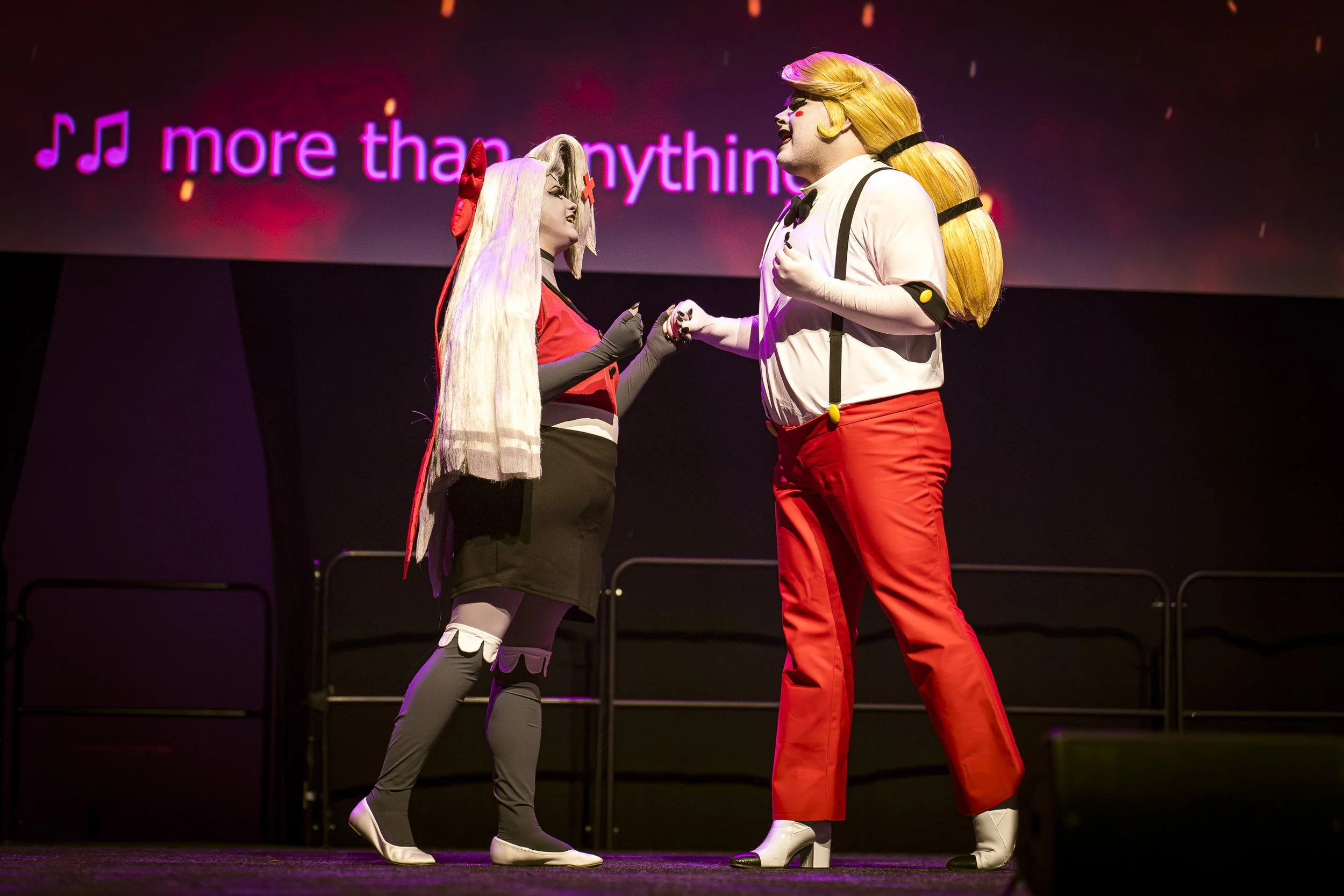
more about international cosplay league





Photos: ©Jenni Suominen, ©nyymix | Cosplayers: Lunaru Cosplay & Saunatonttuli, pinyamiu & moemoefever, heartgrenaded & witchyblitzhycos